
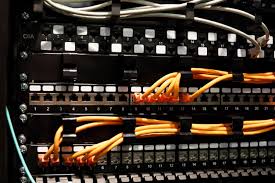
A stable and high-speed network connection is essential for your daily work and even personal tasks — all of which require a reliable network connection in this digitally-driven world. Be it for online gaming, killing time on high-definition videos, or running a business: everything requires the use of a stable internet connection. CAT 6 cable is one of the key elements to have an effective wired network. This post will go over what CAT 6 cables are, how they work, and why they are critical for building fast and reliable networks.
What is a CAT 6 Cable?
Category = Cisco-=temp, wall mount, Coax, CAT, 6, cables In contrast, Cat 6a cables are built for high-speed networks and are used in internet connections, local area networks (LANs), or data centers. The ccr1036 8g 2s+ price in bangladesh is an improved version of the earlier CAT 5e cable with better performance, speed, and reliability.
This means that the CAT 6 cables are composed of four twisted pairs of copper wires, with each pair insulated to eliminate interference from outside factors. Twisting the pairs mitigates crosstalk, which is a common cause of signal degradation, and reduces electromagnetic interference (EMI), yielding a stable data transmission.
Key Features of CAT 6 Cable
Now that you know the relevance of CAT 6 cables to the contemporary world of networking, let us draw CAT 6 specifications that are fundamental to it:
Fast Data Transfer Rates: CAT 6 cables allow data transmission at rates of as high as 10 Gbps (Gigabits per second) over short distances (up to 55 meters). This makes them ideal for applications requiring high speeds like video conferencing, file transfers, and online gaming. You are good up to 1 Gbps for longer distances (up to 100 m), which is perfectly fine for most home and office networking applications.
Bandwidth: ccr1009 7g 1c 1s+ provide a bandwidth capacity of 250 MHz which is more than double that of CAT 5e cables (100 MHz). The more data can be sent simultaneously using the available bandwidth, the less clutter will the network be, and thus the higher overall network efficiency.
Lower Crosstalk and Reduced Interference: The twisted pair construction and improved insulation of CAT 6 cables means that these cables have been designed to minimize crosstalk (the interference between neighboring wires) and electromagnetic interference (EMI). In particular in systems where much electrical noise is present, this means clearer and therefore more reliable data transmission.
Backward Compatible: One of the major reasons Best Computer is a great option is its backward compatibility with older standards like CAT 5 and CAT 5e, which means, bringing CAT 6 cables to a network containing older equipment will not be a problem, only in case, the network equipment supports the lower standard.
Applications of CAT 6 Cable
Although CAT 6 cable is commonly used in every home and business. Here are the most popular use cases:
Home Networks: For residential users, CAT 6 cables are well-suited for wired network installations supporting HD content streaming, online gaming, and video conferencing, which all require a stable and high-speed internet connection. These data-intensive applications demand optimal performance, and CAT 6 cables deliver the fast and reliable connections that allow them to function seamlessly.
Business Networks: In business setups, specifically in the case of offices or data centers, high-speed and high-reliability networking is of utmost importance. Most Internet connection systems use CAT 6 cables to connect computers, servers, and other devices. This high-speed data transfer capacity means that businesses which require high masses of transference data, VoIP and other operations would do best with an Ethernet switch.
Data Centers: CAT 6 cables are widely used in data centers to facilitate high-speed data transfer between servers. High-speed capabilities and minimal interference allow large data sets to be accessed and transferred, without the bottlenecking or performance degradation that can slow down workloads.
Media & Entertainment: A critical driver for technology solutions, the media and entertainment industry has a wide range of high-bandwidth applications. A standard delivery format for high-definition video and audio material over an Ethernet connection, CAT 6 cables facilitate the transmission of data with minimal lag or loss of quality. These are well-suited for video editing studios, live streaming setups, and audio production facilities.
Benefits of CAT 6 Cable Over Other Cables
Above all CAT 6 cables are better than other cables like CAT 5e or CAT 7 in the terms of speed, price, and reliability.
Higher Speed: In the previous few points, we described that the CAT 6 wires have a better speed of data transfer than CAT 5e wires. This makes them ideal for users in need of faster internet connections for streaming, gaming, or uploading large files, among other uses.
Improved Performance over Longer Distances: CAT 5e cables can provide up to 1 Gbps speeds of up to 100 meters, but the CAT 6 cable can support 1 Gbps speeds up to 100 meters as well, along with 10 Gbps speeds up to 55 meters.
Future-Proofing Your Network: CAT 6 cables also provide a level of future-proofing for your network as internet speeds and technology continue to advance. They can provide 10 Gbps, making them more future-proof for new networking technology, and also make for a good long-term investment for home and business networks.
Costliness — though CAT 6 cables cost more than CAT 5e cables, they are still much less expensive than higher speed-structured cables such as CAT 6a and CAT 7 cables, making them a budget-friendly option for users that are ready to upgrade their networks without spending much.
How To Choose The Right CAT 6 Cable
Here what you need to consider when buying CAT 6 cables:
Cable Length: Measure the distance between the devices you want to connect to ensure you buy a cable long enough. It’s better to buy a cable that is longer than you need so you can coil the excess cable rather than one that is too short.
STP vs. UTP: Shielded CAT 6 cables (STP) feature a layer of shielding that prevents external interference while Unshielded CAT 6 cables (UTP) are cheaper variants and appropriate for most indoor environments. But if your cable will run through areas with a lot of electromagnetic interference (such as factories or industrial spaces), you might consider a shielded cable.
Jacket type: When used in a different environment, CAT 6 cables come with varying jackets. Some examples of this are plenum-rated cables, meant for use in circulation systems, and outdoor-rated cables, which can withstand exposure to the elements.
Conclusion
Compared to older standards like CAT 5e, CAT 6 cables provide faster speeds, higher bandwidth, and better overall performance while still being a cost-effective option for most users. Whether in a home network or a business or data center environment, CAT 6 cables are an indispensable tool in modern networking. CAT 6 cables: Overview When choosing between CAT 6 cables, considerations such as the length of the cable, the amount of shielding, and the environment where the cable will be installed should be considered to make sure you will get the right cable that will serve best for your network. Thanks to their future-proof performance and high power, CAT 6 cable will ensure the fast availability of efficient internet for a long, long time.



Leave a Reply