
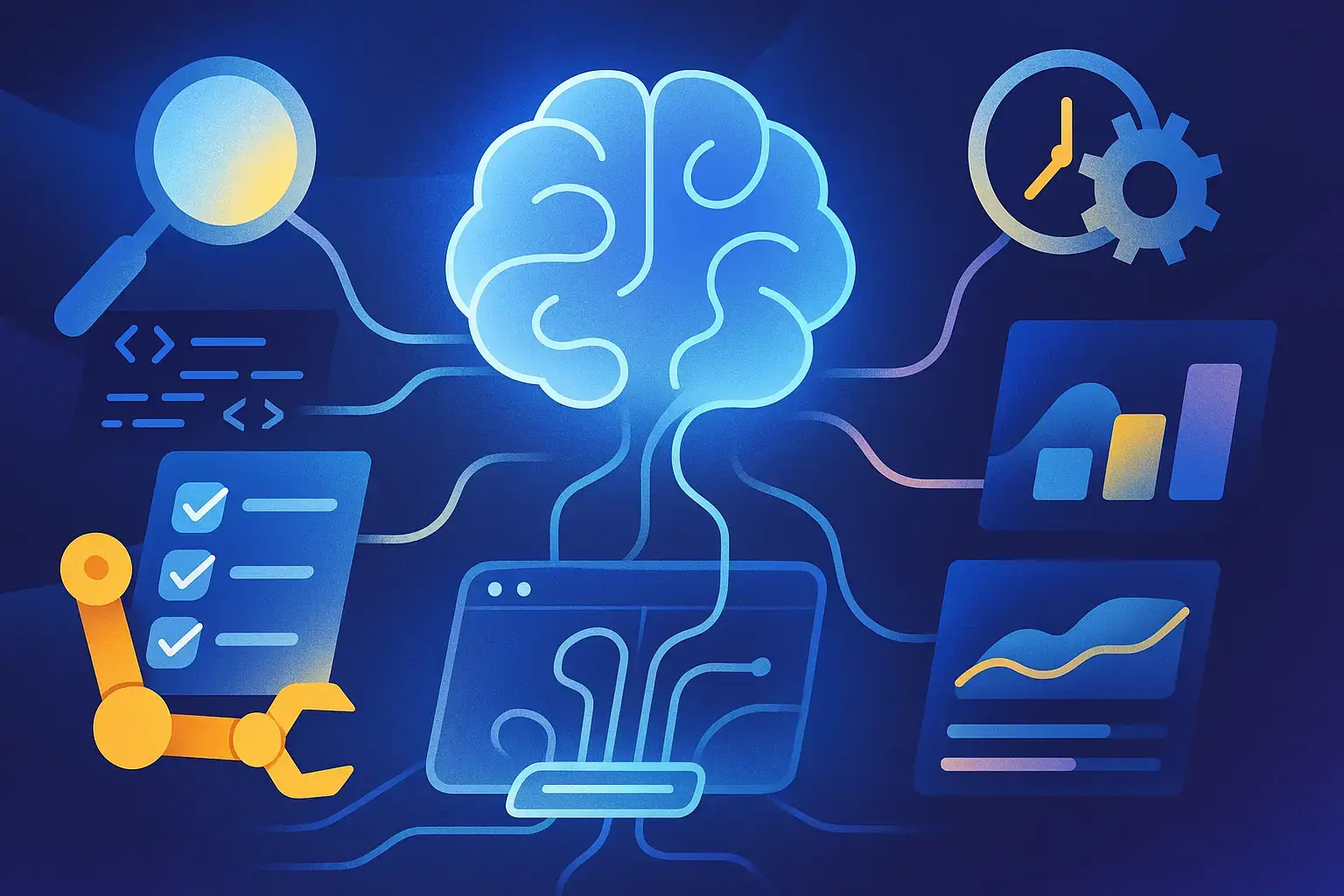
Imagine a vast laboratory where thousands of experiments run simultaneously,chemical reactions bubbling, machines humming, sensors blinking,yet not a single human scientist is present. Instead, intelligent systems design hypotheses, test them, evaluate outcomes, and refine their approach entirely on their own. This may sound like science fiction, but it’s the emerging reality of autonomous experimentation engines. These algorithms act as tireless researchers, continuously learning from outcomes and iterating without fatigue, bias, or hesitation.
The Rise of Autonomous Experimenters: A New Scientific Revolution
Traditional experimentation mirrors the work of a curious investigator who forms a theory, tests it, learns from the results, and tries again. Autonomous experimentation engines take this cycle to an entirely new dimension. They act like automated explorers navigating a universe of possibilities,rapidly running thousands of small tests, adjusting hypotheses, and zeroing in on insights humans might overlook.
Professionals beginning their journey through a Data Science Course often encounter structured experimentation practices such as A/B testing or controlled trials. But autonomous experimentation engines go far beyond these linear approaches. Instead of waiting for humans to design and run each experiment, these systems independently craft hypotheses and evaluate outcomes at speeds unimaginable to human researchers.
The Core Mechanisms: How Machines Learn to Experiment
Autonomous experimentation relies on a combination of cutting-edge techniques that mimic and accelerate the scientific method.
Reinforcement Learning for Decision Cycles
These engines constantly evaluate their actions,like a researcher who learns from each failed experiment. Using reward mechanisms, the system understands which paths yield promise and which should be avoided. It doesn’t depend on static rules but adapts dynamically.
Bayesian Optimisation for Smart Search
Instead of blindly testing every possible variable combination, Bayesian optimisation helps the system focus on the most promising areas first. It acts like a wise advisor pointing the researcher to fertile ground before any tests begin.
Causal Inference for True Understanding
These engines don’t just spot correlations; they determine why things happen. This allows them to prune irrelevant pathways and focus only on experiments with meaningful impact.
Evolutionary Algorithms for Creative Discovery
Much like natural selection, evolutionary algorithms create variations, test them, and let the strongest survive. This method is particularly effective when exploring large, complex hypothesis spaces.
By combining these approaches, autonomous experimentation engines evolve into highly capable digital scientists.
Beyond Human Limitations: Why Automation Transforms Experimentation
Human researchers bring creativity and intuition, but they also face limitations,time, cost, bias, and fatigue. Autonomous experimentation engines remove these constraints, resulting in significant advantages:
- Massive scalability: Thousands of experiments can run in parallel.
- Continuous improvement: Systems refine their models 24/7.
- Bias reduction: Decisions are driven by evidence rather than assumptions.
- Faster discovery cycles: Hypotheses and tests are evaluated in minutes, not months.
- Exploration of non-intuitive paths: Machines often discover patterns humans overlook.
Professionals expanding their expertise through a data scientist course in hyderabad often learn how automation is reshaping industries,from drug discovery to marketing optimisation,by accelerating experimentation.
Real-World Applications: Where Autonomous Engines Lead the Way
Autonomous experimentation engines already influence multiple sectors, proving that automated research is no longer theoretical,it is operational.
Drug Discovery and Material Science
AI-driven labs automatically test chemical compounds, adjusting formulations in real time. This speeds up discovery of new medicines, catalysts, and materials that traditionally require years of manual research.
Manufacturing and Robotics
Robots fine-tune sensor calibration, assembly steps, and motion strategies autonomously, improving efficiency and reducing operational failures.
Digital Marketing
Instead of running one campaign at a time, engines simultaneously test hundreds of variations,headlines, images, calls-to-action,and optimise performance instantly.
Financial Systems
Trading algorithms experiment with strategies across simulated environments, ensuring only robust, profitable methods are deployed.
Climate and Energy Systems
AI agents test environmental models, renewable configurations, and energy optimisations faster than conventional simulations can handle.
These applications highlight how autonomous experimentation extends far beyond computation,it transforms real-world outcomes.
Ethical and Operational Challenges: The Guardrails of Automation
Despite their power, autonomous experimentation engines require strong governance. Without human oversight, systems may pursue harmful or unethical experiments. Key concerns include:
- Data privacy violations if systems use sensitive data without proper controls
- Unsafe actions in robotics or biotech settings
- Opaque decisions that make it difficult to understand why certain paths were chosen
- Reinforcement of biases if the training data contains hidden unfairness
- Runaway experimentation leading to resource misuse
Designing strong guardrails,transparent frameworks, human-in-the-loop supervision, and robust ethical guidelines,is essential to ensuring safe and beneficial deployment.
Conclusion: The Future Scientist Is a Hybrid of Man and Machine
Autonomous experimentation engines represent a breakthrough in how we discover, innovate, and optimise. They empower industries to move from slow, sequential workflows to dynamic, adaptive experimentation capable of solving problems at unprecedented scale.
Learners beginning with a Data Science Course gain the foundation to understand experimentation. Those advancing through a data scientist course in hyderabad learn to build, monitor, and refine autonomous systems capable of discovering insights beyond human reach.
As humanity steps into an era where machines test hypotheses and explore possibilities independently, the future of innovation becomes a partnership: human creativity guiding machine efficiency. Together, they hold the potential to reshape science, technology, and decision-making as we know it.
ExcelR – Data Science, Data Analytics and Business Analyst Course Training in Hyderabad
Address: Cyber Towers, PHASE-2, 5th Floor, Quadrant-2, HITEC City, Hyderabad, Telangana 500081
Phone: 096321 56744




Leave a Reply